Who acts first in poker?
Before the flop, the player to the left of the big blind acts first, and the two blinds act last. On the flop, the turn and the river, the first player still in to the left of the dealer button acts first, and the button acts last. With only two players, the button pays the small blind and acts first before the flop.
Episode 3 of Hold’em 101, written out for people who’d rather read than watch. Episode 1 gave you the short version: the button moves one seat to the left after every hand, the two players to its left pay the blinds, and after the flop the button acts last. This one fills in the rest: what the blinds really cost you, who acts when players fold, and what changes with a full table or with only two or three players.
The blinds: the cost of sitting at the table
Because the button moves every hand, the blinds move with it, so everyone takes a turn paying them. Think of the blinds as the cost of sitting at the table: folding every hand isn’t free.
That cost is one difference between the two ways to play. In a cash game, the blinds stay the same size all night. In a tournament they go up on a clock, so sitting and waiting gets more expensive the longer it runs.
Who acts first, before and after the flop
Before the flop, the player to the left of the big blind acts first, and then it goes around to the left, one player at a time. The blinds already have chips in, so they act last: the small blind, then the big blind.
After the flop it changes. On the flop, the turn and the river, the first player still in to the left of the button goes first, and the button goes last. If the button has folded, the last player still in before the button acts last instead.
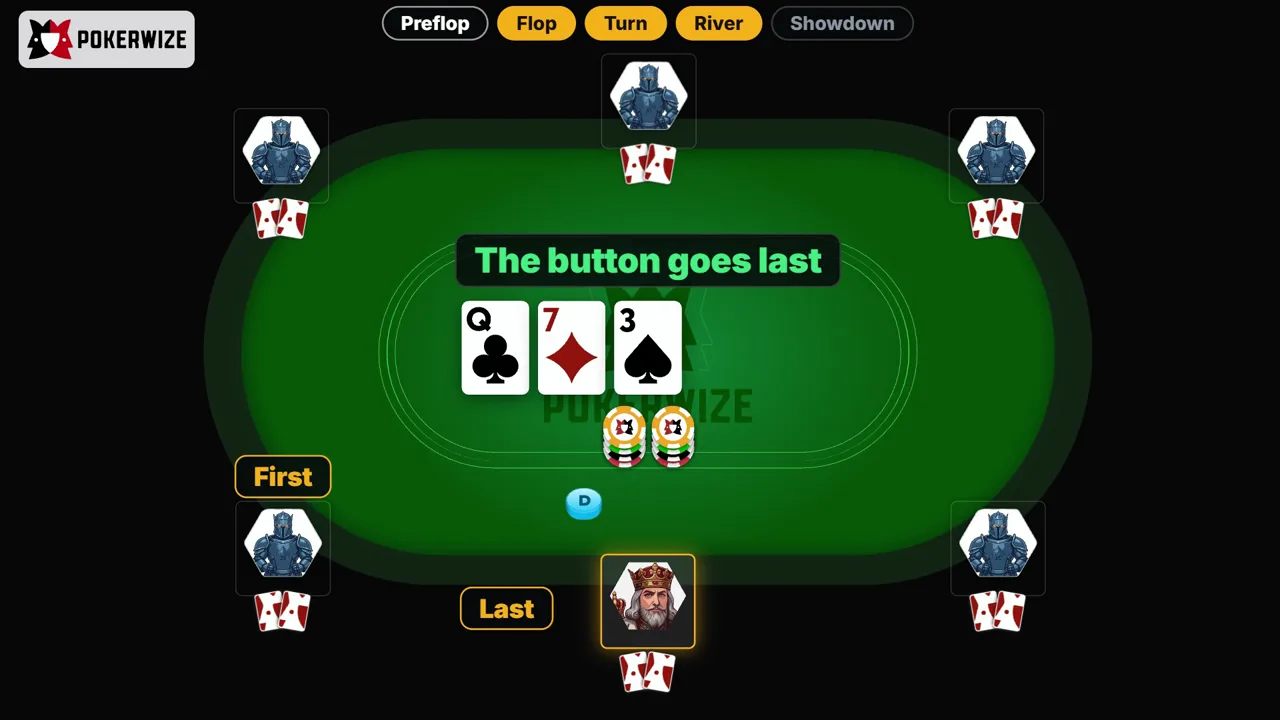
Test one: two players have folded
Six players start the hand. By the flop, the small blind and the button have both folded. Who acts first, and who acts last? Decide before you read on.
The big blind acts first: with the small blind gone, they’re the first player still in to the left of the button. And the player right before the button acts last, because the button has folded too.
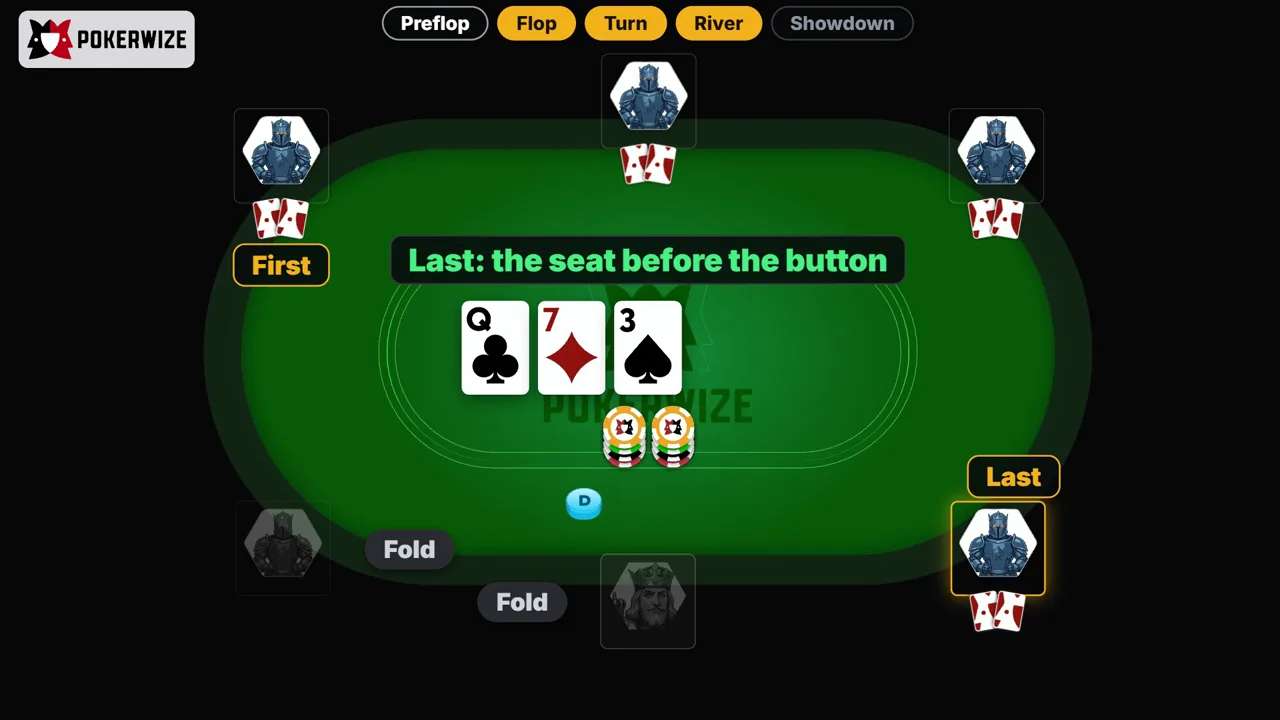
Why acting last is an edge
By the time it’s your turn, you’ve seen what everyone else did. Did they check? Did they bet big? You get to use that, and they get nothing from you. Poker players call this position, and it’s why the button is the best seat at the table.
And it isn’t unfair: the button moves every hand, so everyone gets the best seat just as often as they pay the blinds.
A full table, and two players
The rules don’t change with the number of players, only the number of seats. With nine players, a full table, the button, the small blind and the big blind work exactly the same way. There are just more players between the big blind and the button.
With only two players, there’s one twist. The button pays the small blind, and the other player pays the big blind. So before the flop the button acts first, and after the flop the button acts last, like always. Two-player poker is called heads-up.
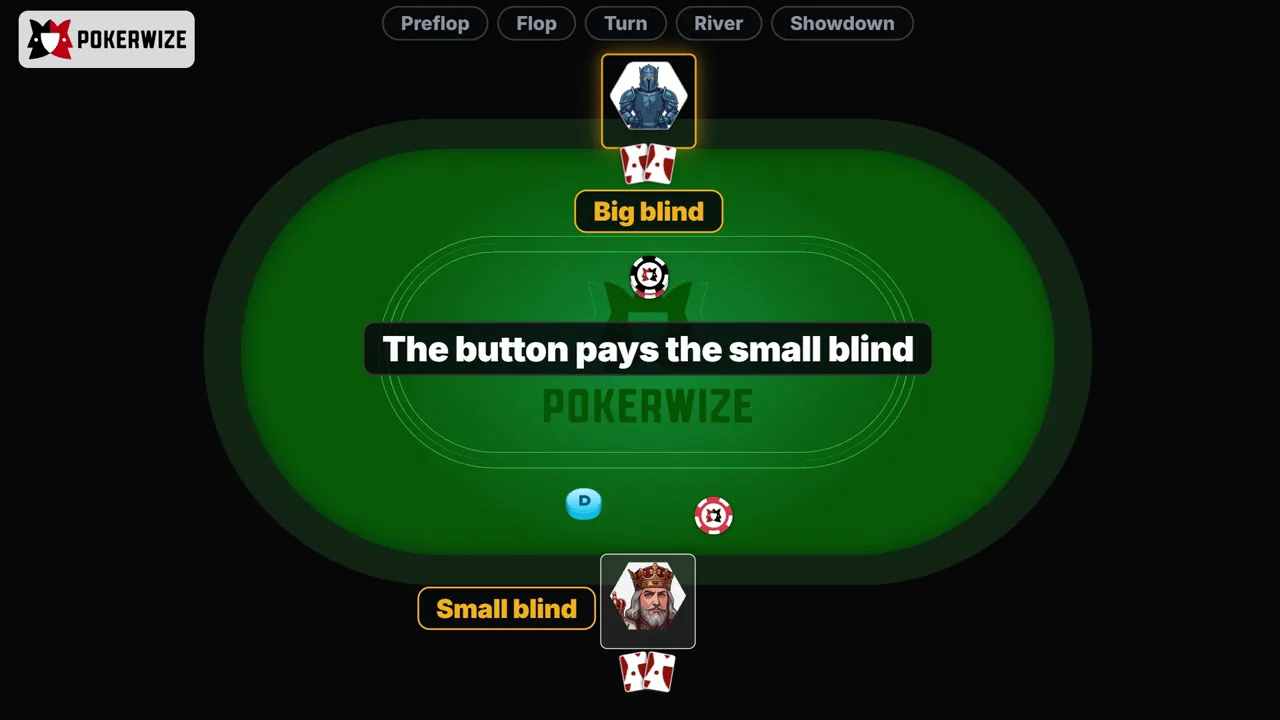
Test two: three players
Three players: the button, the small blind and the big blind. Who acts first before the flop? Decide before you read on.
The button. Before the flop, the first to act is the player to the left of the big blind, and with three players, that’s the button. After the flop it’s back to normal: the small blind first, and the button last.
The names of the seats
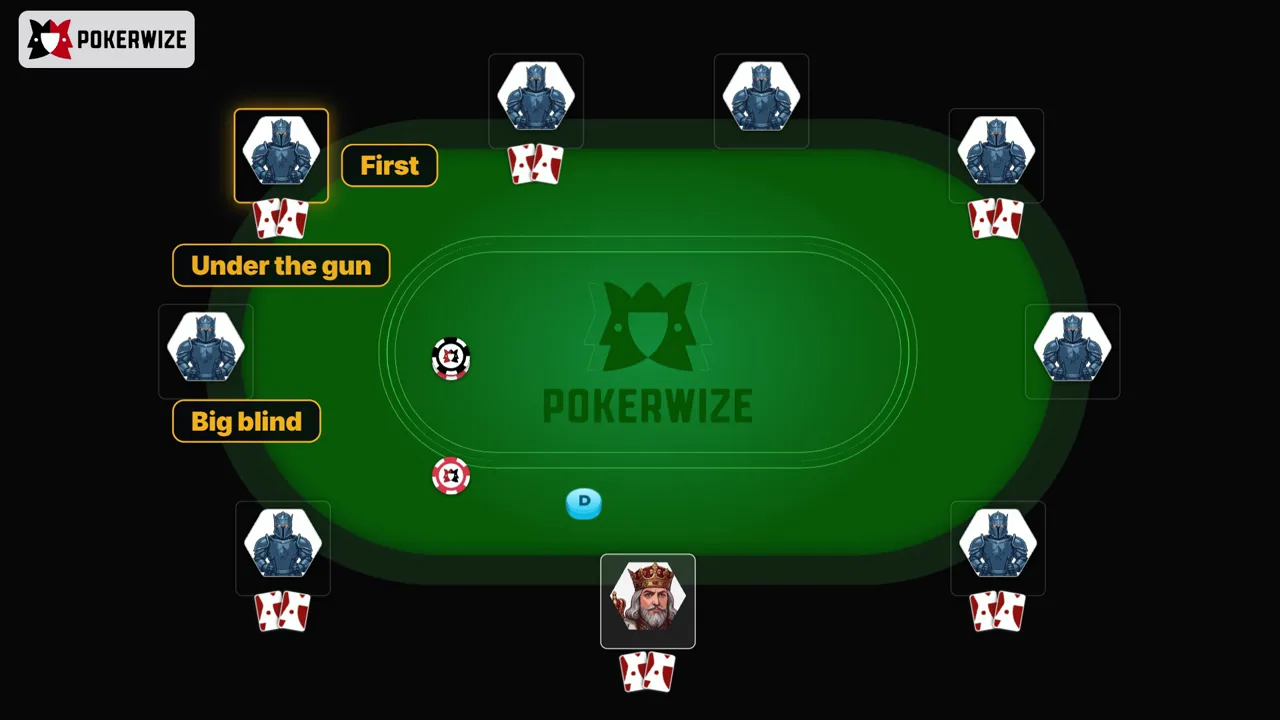
You’ll also hear players use names for the seats. You don’t need them to play, but you’ll want to know what people are talking about. With six players, going left from the button: the small blind, the big blind, and then the first player to act before the flop, which has the best name in poker: under the gun. Then the hijack. Then the cutoff, right before the button.
At a full table of nine, the blinds and under the gun stay where they are, and three more seats come next, each with its own name: under the gun plus one, middle position and the lojack. Then the same three as before: the hijack, the cutoff and the button.
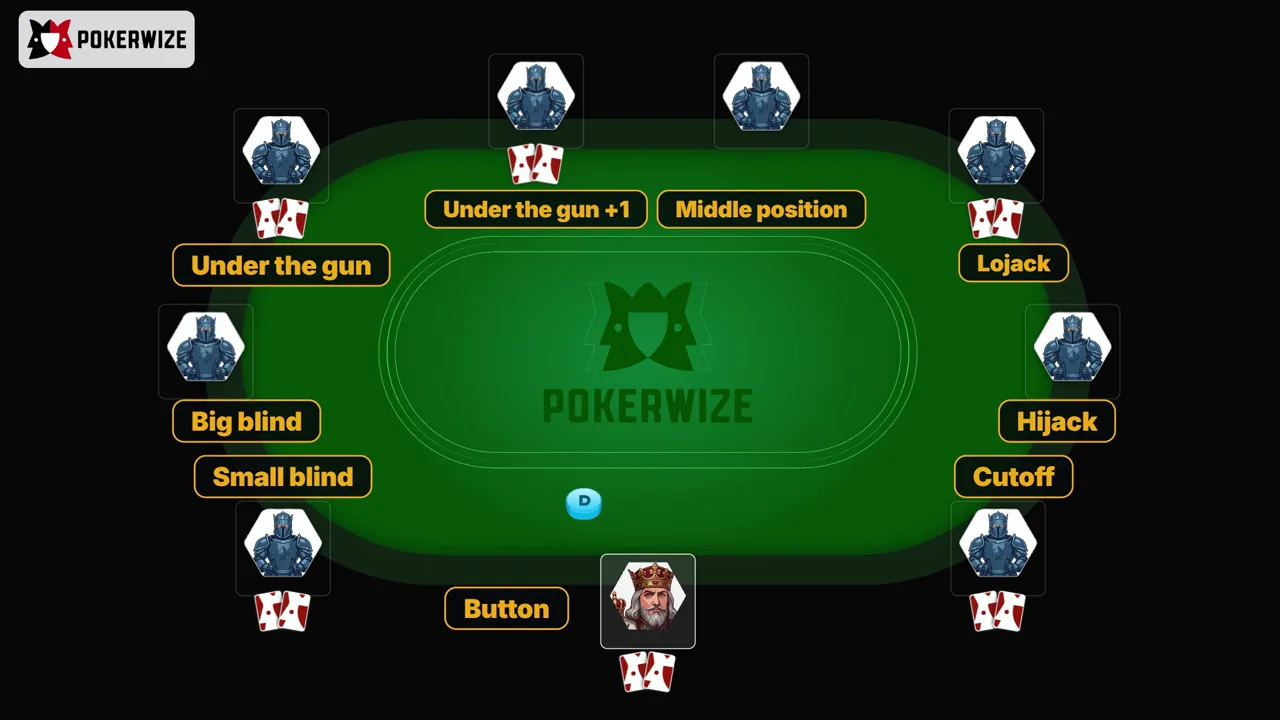
Test three: a full table
Nine players, and you know where the button is. Who pays the big blind, and who acts first before the flop? Decide before you read on.
The big blind is two seats to the left of the button. The first to act before the flop is the next player along, three seats to the left of the button: under the gun.
Why this matters later
The later you act, the more you know. And the more you know, the more hands you can play. Under the gun, good players only play their strongest hands. On the button, a lot more. We’ll come back to that in Episode 6, and it runs all the way through our Pro Mindset series.
So: find the button. The two players to its left pay the blinds. Before the flop, the player to the left of the big blind starts. After the flop, the first player still in to the left of the button starts, and the button goes last.
Next in Hold’em 101 is Episode 4, How Betting Works: what you can actually do when it’s your turn. When you’re ready to play, you can create a private table at PokerWize and play with your friends for free.
Key takeaways
- The blinds move with the button, so everyone pays them in turn: folding every hand isn’t free. In a tournament they go up on a clock.
- Before the flop, the player to the left of the big blind acts first and the blinds act last. After the flop, the first player still in to the left of the button acts first and the button acts last.
- Heads-up, the button pays the small blind and acts first before the flop. Three-handed, the button acts first before the flop.
- Acting last is position: the later you act, the more you know, and the more hands you can play.
Learn. Play. Master.
Put it into practice: start training for free at www.pokerwize.com.