How often do you have to defend against a bet?
Enough that their bluffs can’t win on their own. Against a bet of a third of the pot, you have to keep going (call or raise) about 3 times in 4. The bigger the bet, the less often you have to defend: about 60% against two thirds of the pot, about 44% against one and a quarter times the pot.
Episode 6 of the Pro Mindset series, written out for people who’d rather read than watch. The poker numbers come from GTO solves, computer programs that play poker against themselves until they find an optimal strategy. It follows Episode 5.
New here? GTO in short
GTO stands for game theory optimal: a strategy nobody can beat by adjusting to it. Think of rock, paper, scissors: throw each one a third of the time and nothing your opponent does can beat you. Poker works the same way. A value bet is a strong hand that wants a call, and a bluff is a weak hand that wants a fold. Mix them in the right amounts and the other player can’t beat you by always calling or always folding.
Remember Episode 5
In Episode 5, under the gun bet the river with two value hands for every bluff, and your call came out to exactly zero. Calling and folding were worth the same, and that’s why GTO mixes. That was the bettor’s side. Today we sit in the other chair.
Amateur vs pro
“I’ve got nothing, so I fold.” That’s the amateur, who only looks at their own two cards. The pro asks: if I fold this much, what can they bet with? If you fold too often, they don’t need a hand at all.
The hand, to the flop bet
Our hand. Under the gun raises and you call on the button with king-queen of hearts. The flop comes the ace of hearts, the nine of hearts and the three of spades, and under the gun bets a third of the pot, about 2.5 big blinds into 7.5.
How often you have to defend
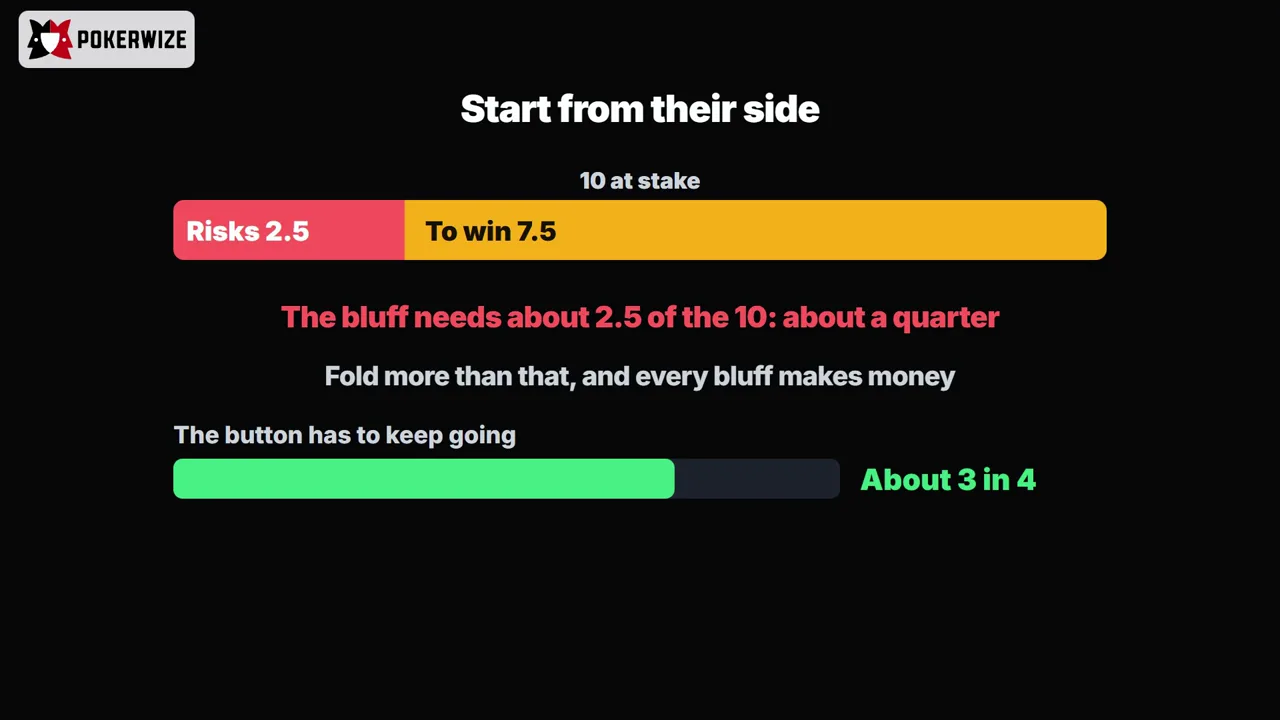
Start from their side. A bluff here risks 2.5 big blinds to win the 7.5 in the middle. Out of the 10 at stake it needs about 2.5, so the button has to fold about a quarter of the time. Fold more than that and every bluff makes money, whatever they hold. So the button has to keep going about 3 times in 4. That number is the minimum defense frequency: how often you have to call or raise so their bluffs can’t win on their own.
What GTO actually does
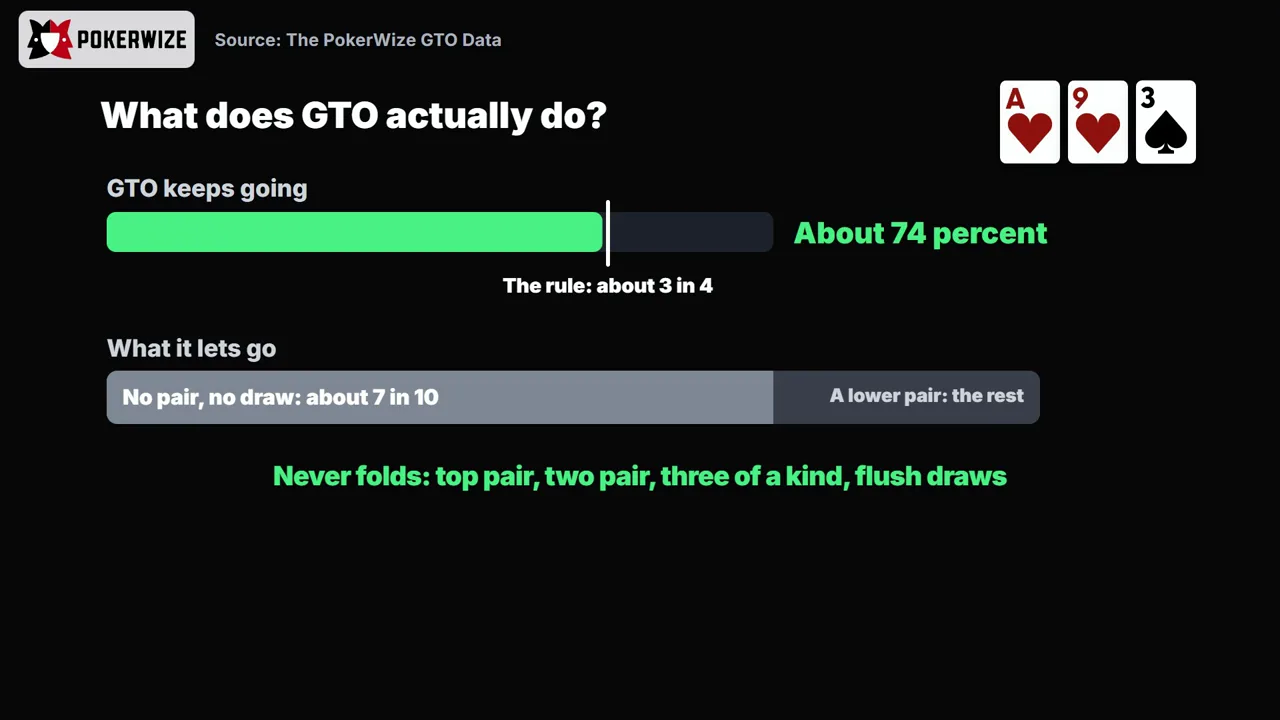
With every hand the button could have, GTO keeps going about 74% of the time: the 3 in 4, almost exactly. And look at what it lets go: about 7 in 10 of its folds have no pair and no draw. It never folds top pair and it never folds a flush draw. That’s why king-queen of hearts never folds here.
Turn the dial: bigger bets
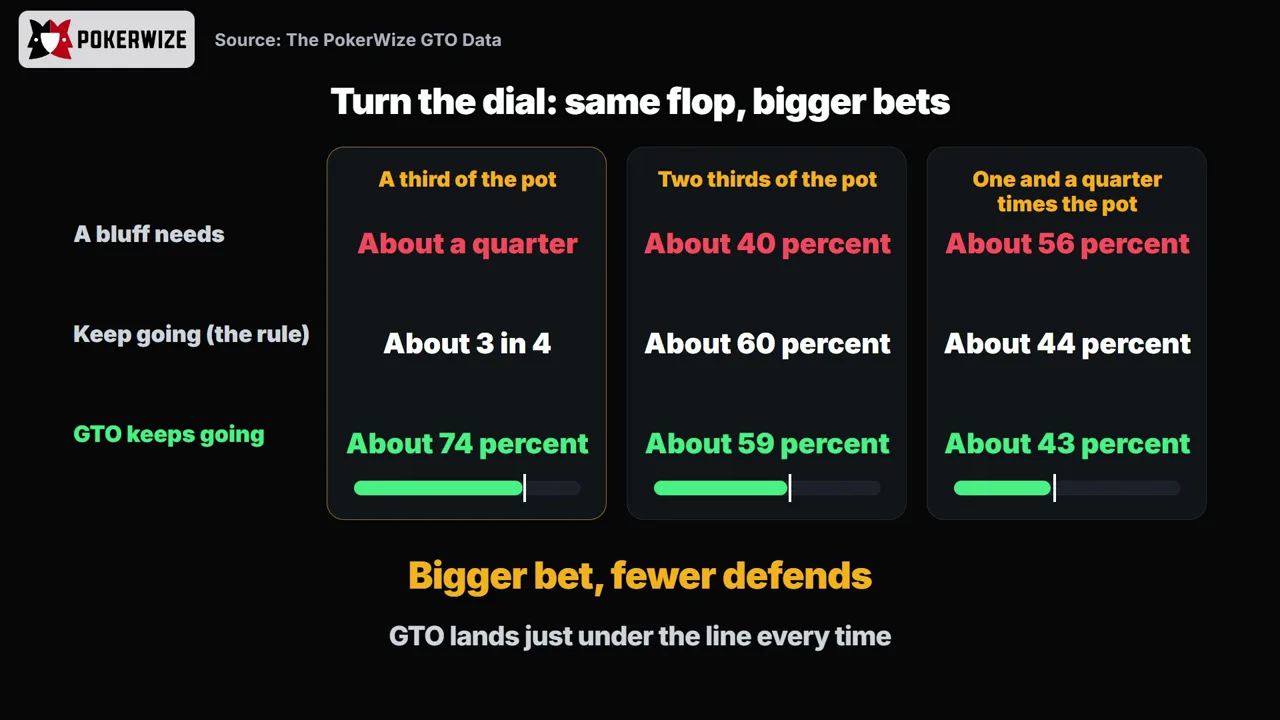
Same flop, same hands, but say under the gun bets two thirds of the pot. Now a bluff only has to work about 40% of the time, so the button has to keep going about 60%, and GTO keeps going about 59%. Bet one and a quarter times the pot and a bluff needs about 56%: the button has to keep going about 44%, and GTO keeps going about 43%. Bigger bet, fewer defends, and on this flop GTO lands just under the line every time.
Why bet small here
So why does under the gun bet small? From Episode 4: on this flop it has only a small edge with its whole range, and about as many of the very best hands as the button. A small bet is cheap. It lets under the gun bet often, and it still makes the button defend most of its hands. That’s why, when under the gun bets this flop, it bets a third of the pot almost every time.
The turn: a big bet
Then the five of clubs comes, and the plan changes. Under the gun checks more than half the time now. But when it bets, it mostly bets big: one and a quarter times the pot, about 15.6 big blinds. A big bet puts the most pressure on hands like ours: good enough to call a small bet, not strong enough to love a big one. Now the button has to keep going about 44% of the time and GTO keeps going about 47%. Our hand sits right on that edge, and from Episode 2, calling is worth almost exactly zero, so GTO folds king-queen of hearts about 4 times in 10 and calls about 6. Same hand, same flush draw: the small bet on the flop never folds it, the big bet on the turn folds it about 4 times in 10.
The size sets the bluffs
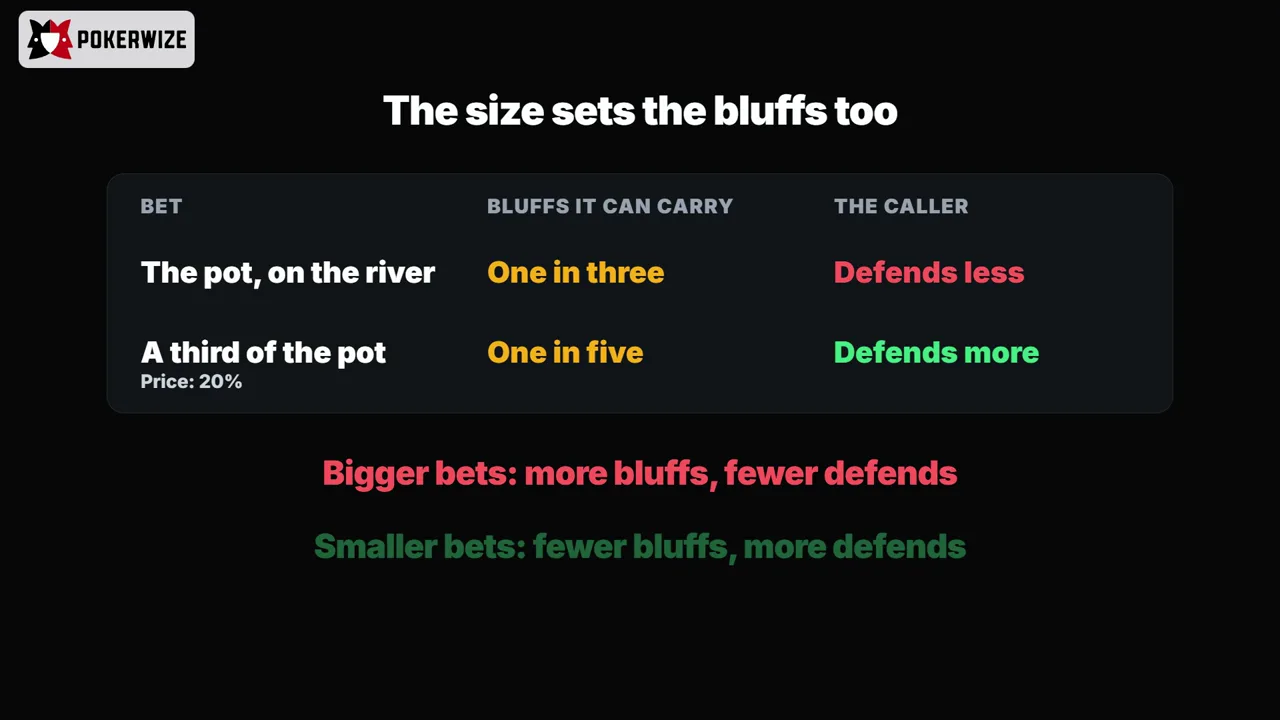
The size sets the bluffs too. In Episode 5, under the gun bet the pot on the river and one bluff in three was exactly right. A bet of a third of the pot gives the caller a 20% price, so it gets only one bluff in five. Bigger bets carry more bluffs, and the caller defends less. Smaller bets carry fewer bluffs, and the caller defends more.
What does this bet need to work?
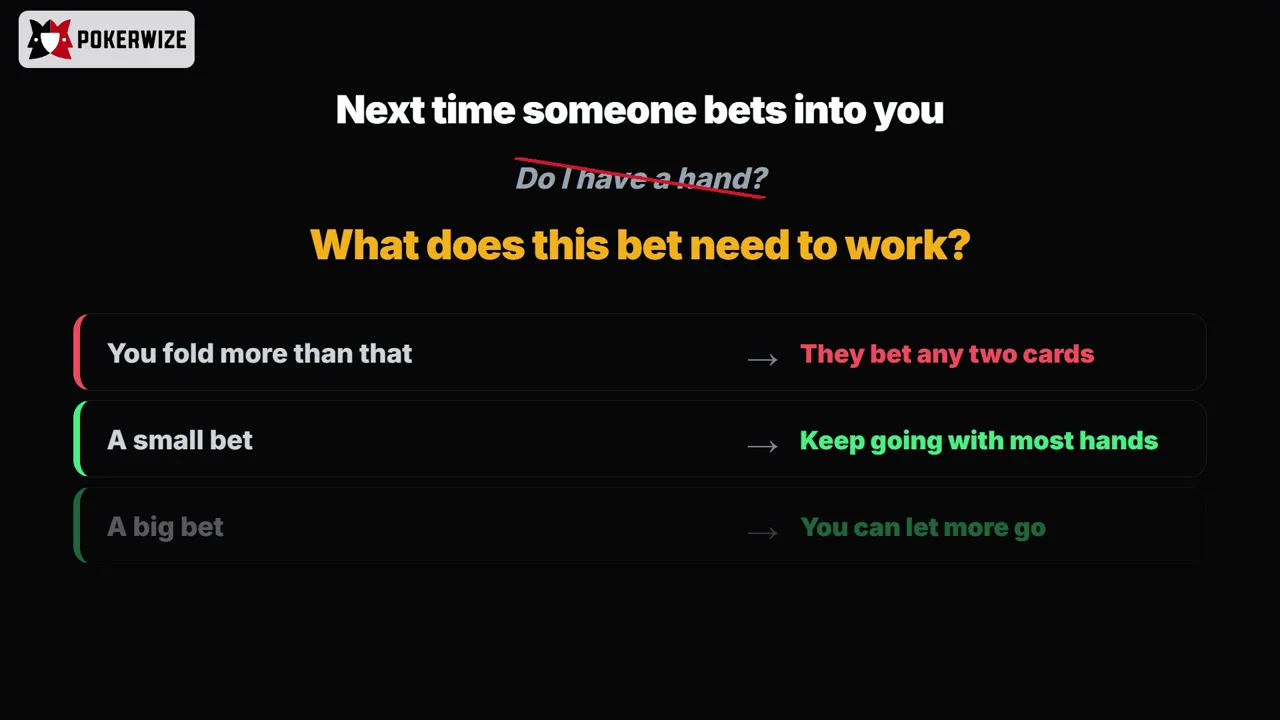
Next time someone bets into you, don’t just ask “Do I have a hand?” Ask: what does this bet need to work? If you’d fold more often than that, they can bet any two cards and make money. Against a small bet, keep going with most of your hands. Against a big one, you can let more go. Your folds are part of your strategy too.
To practice defending, the PokerWize GTO Trainer shows the EV, equity and pot odds of each decision live.
Key takeaways
- Minimum defense frequency: start from their bluff. Risking 2.5 to win 7.5 needs about a quarter of folds, so you keep going about 3 in 4.
- Bigger bets need fewer defends: about 74%, 59% and 43% for a third, two thirds and one and a quarter times the pot.
- The size sets the bluffs: a pot-sized river bet carries one bluff in three, a third-pot bet one in five.
- Don’t fold more than the bet needs, or they can bet any two cards and profit.
Learn. Play. Master.
Put it into practice: start training for free at www.pokerwize.com.