How do you read opponents in poker?
Read the player before your cards. Two questions sort most players: do they play a lot of hands or a few, and do they bet and raise or mostly check and call? Then adjust from GTO only as far as the evidence takes you.
Episode 7 of the Pro Mindset series, written out for people who’d rather read than watch. The poker numbers come from GTO solves, computer programs that play poker against themselves until they find an optimal strategy; the rest is simple arithmetic. It follows Episode 6.
New here? GTO in short
GTO is a balanced strategy: it mixes strong hands and bluffs so well that nobody can beat it by adjusting to it. Against a balanced bet, calling and folding are worth the same. But real players aren’t balanced. Today is about finding the ones who aren’t, and making them pay.
Remember Episode 6
In Episode 6 we learned how often you have to keep going against a bet so nobody can bet any two cards against you. That’s your defense. Today we go on offense.
Amateur vs pro
Think about your last big hand. What do you remember first, your cards or your opponent? Most players say their cards. That’s the amateur: “look at my cards, how do I feel about them,” and only then, maybe, what they might have. The pro flips the order: who am I up against, what’s the price, and only then, where does my hand fit?
Your hand has no value on its own
Pocket kings are a monster, until the tightest player at the table, who hasn’t raised in two hours, moves all in. The cards didn’t change. The player did.
Four players, and what to watch
Who are they? Ask two questions. Do they play a lot of hands or only a few? Do they bet and raise, or mostly check and call? That gives you four players. The OMC, short for old man coffee, plays few hands and rarely bluffs. The Calling Station plays lots of hands and calls almost everything. The Shark plays few hands but bets hard. The Maniac plays lots of hands and bets all the time.
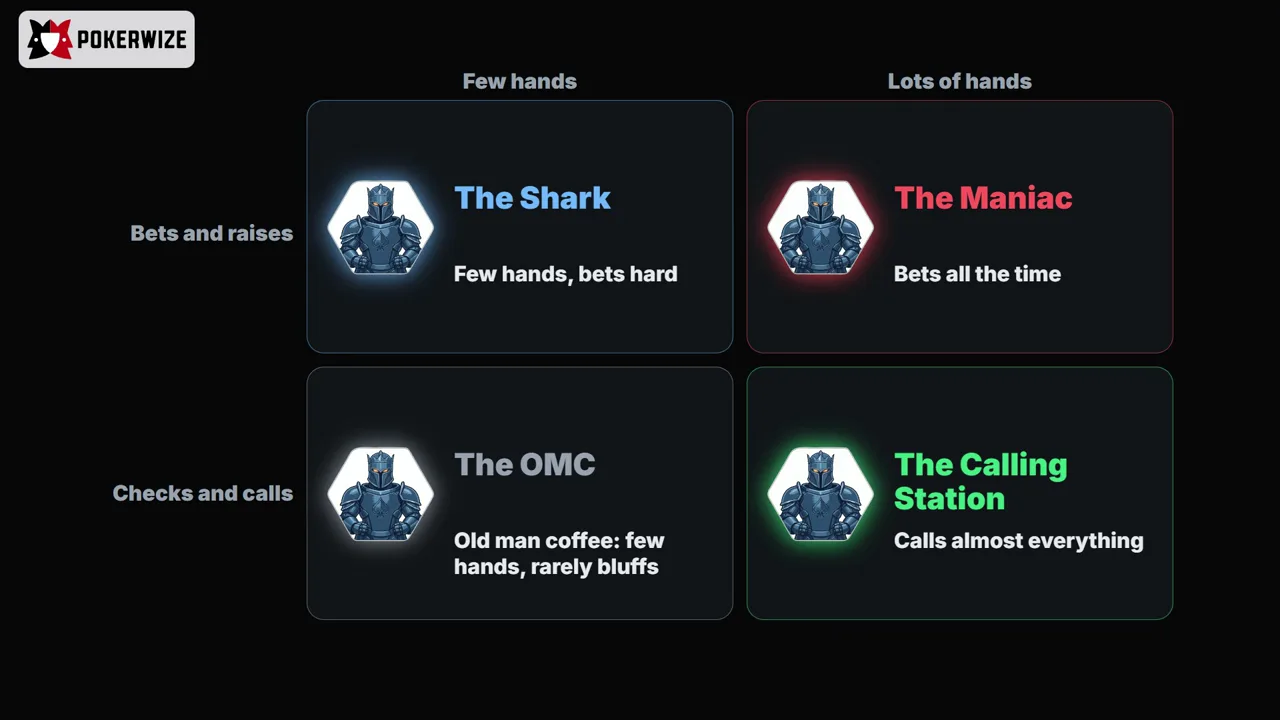
Most people think reading players means spotting nervous hands and tells. The pros mostly read patterns. Labels come from what players do, not how they look. Watch how often they play a pot, watch how their bet sizes match their hands, and watch every showdown, because a showdown shows you what every bet meant. The best time to study a player is when you’re not in the hand.
Same hand, different opponent
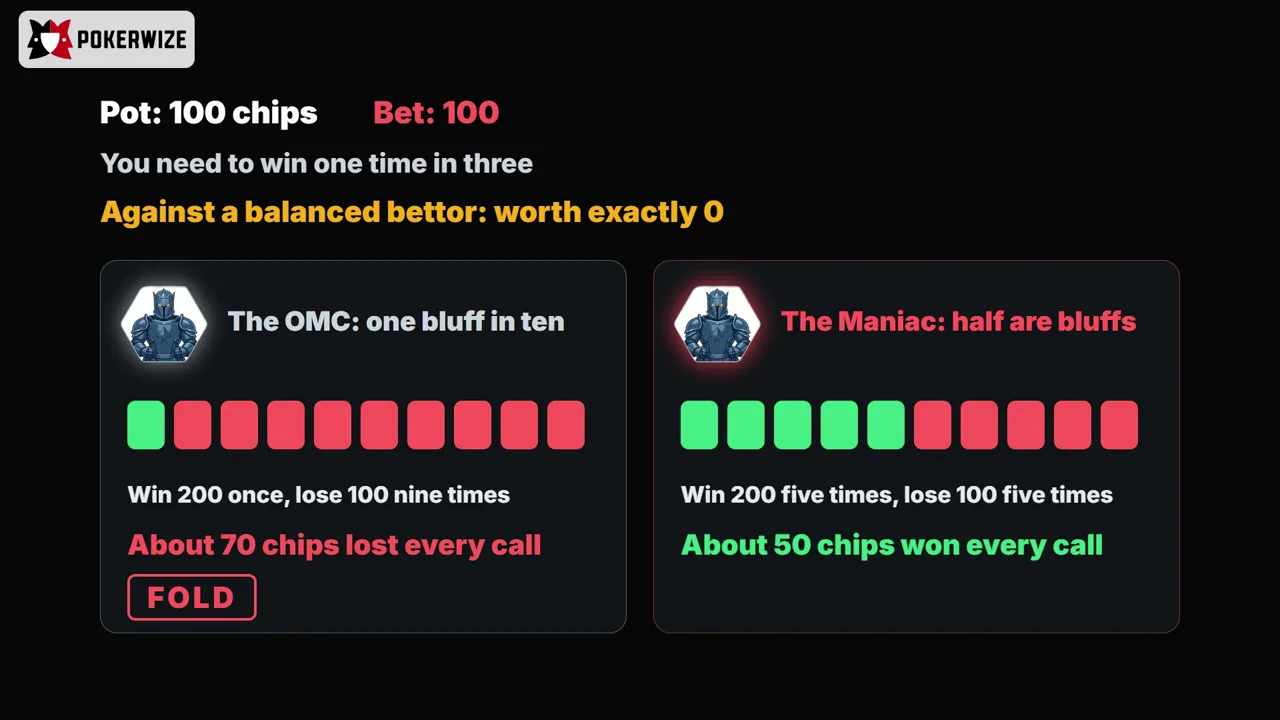
Put it to work. From Episode 5: on the river the pot is 100 chips and they bet 100, so you need to win one time in three. Against a balanced bettor, with one bluff for every two value hands, your call is worth exactly zero. But say it’s the OMC, who bluffs only one time in ten. Call ten times: you win 200 once and lose 100 nine times, about 70 chips lost every call. Fold. Now say it’s the Maniac, and half of those big bets are bluffs. Call ten times: you win 200 five times and lose 100 five times, about 50 chips won every call. Same cards, same price. The player made the decision.
Our hand on the turn
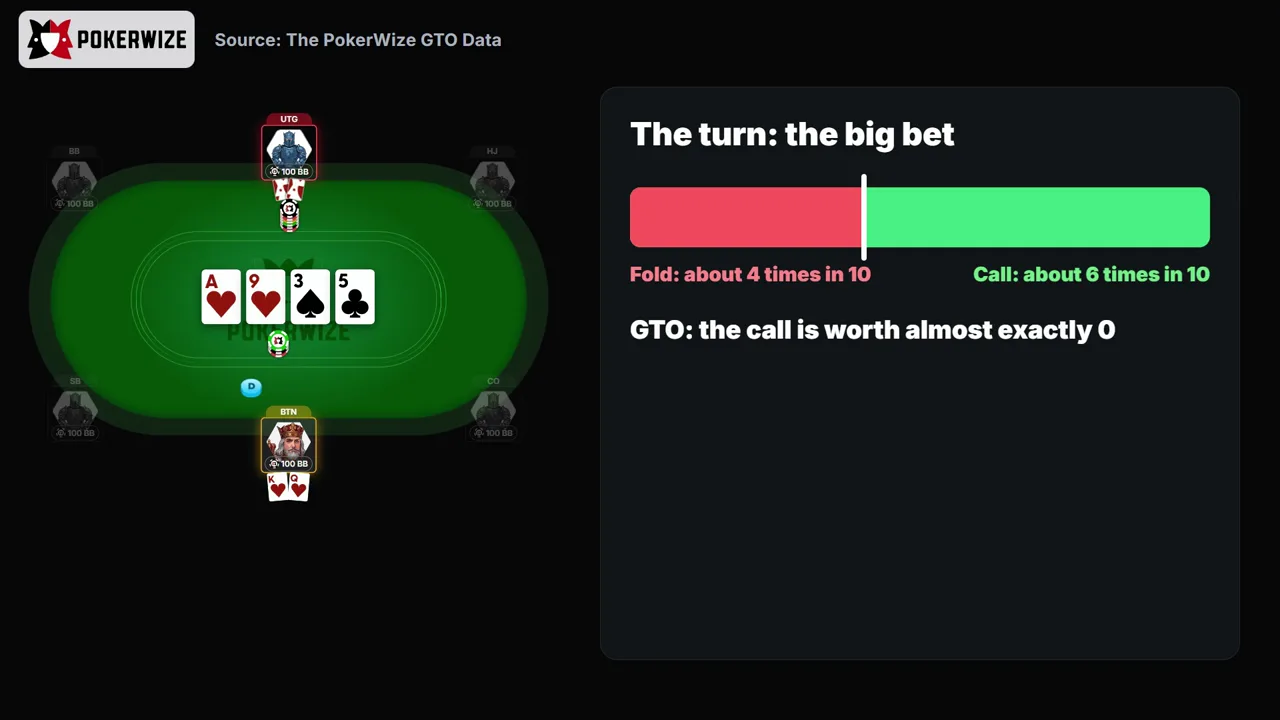
That’s our hand on the turn too. From Episode 2: against the big bet, GTO folds king-queen of hearts about 4 times in 10 and calls about 6, because against a balanced bettor the call is worth almost exactly zero. Against an OMC who almost never bluffs that big, lean toward folding. Against a Maniac, lean toward calling.
Their folds: your bluffs
Their folds matter just as much. From Episode 6: a bluff of 2.5 big blinds into 7.5 needs about a quarter of folds to break even. Against a Calling Station who never folds, every one of those bluffs just loses the 2.5 you bet. So stop bluffing them, and bet your good hands bigger instead. Against a player who folds half the time, every bluff wins about 2.5 big blinds on average. Bluff them more.
The Shark, and GTO as home base
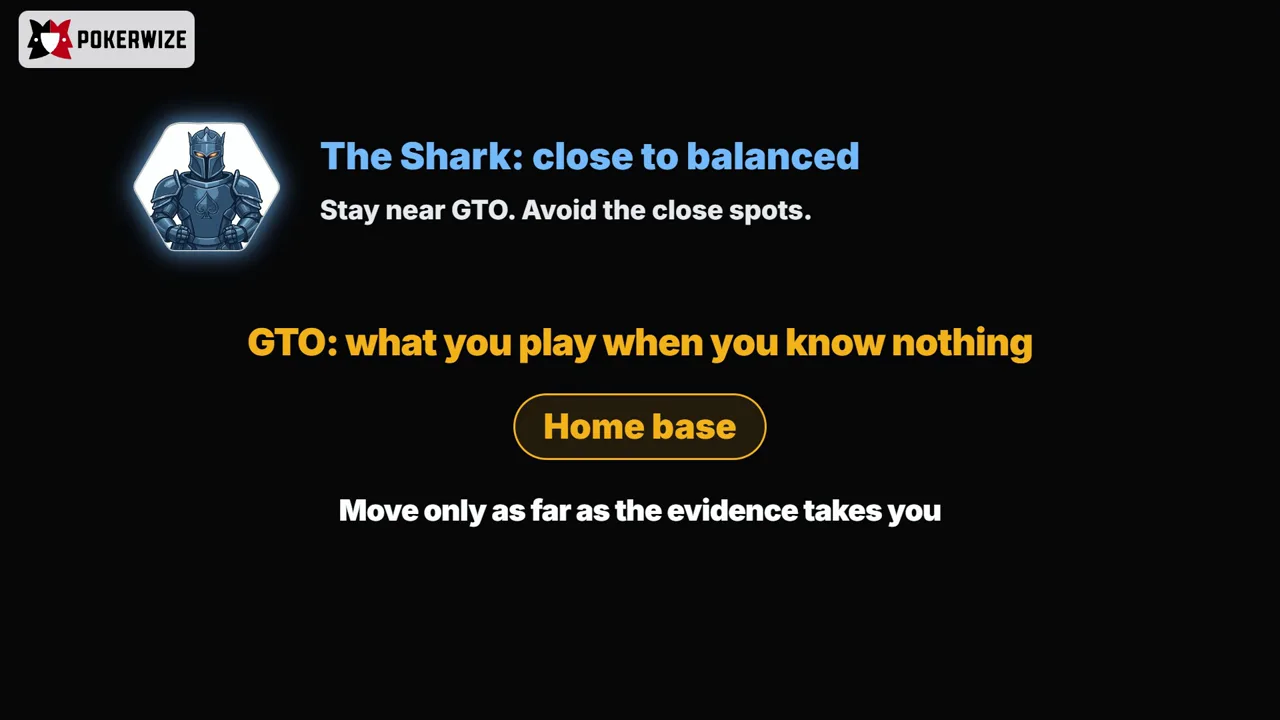
And the Shark? A good player is close to balanced, so there’s not much to take. Stay near GTO and avoid the close spots. That’s the point of GTO: it’s what you play when you know nothing about a player. It’s your home base. Move away only as far as the evidence takes you, and come back when it changes. Fold every time the OMC bets big, and a smart OMC will start bluffing you.
Them. Odds. Me.
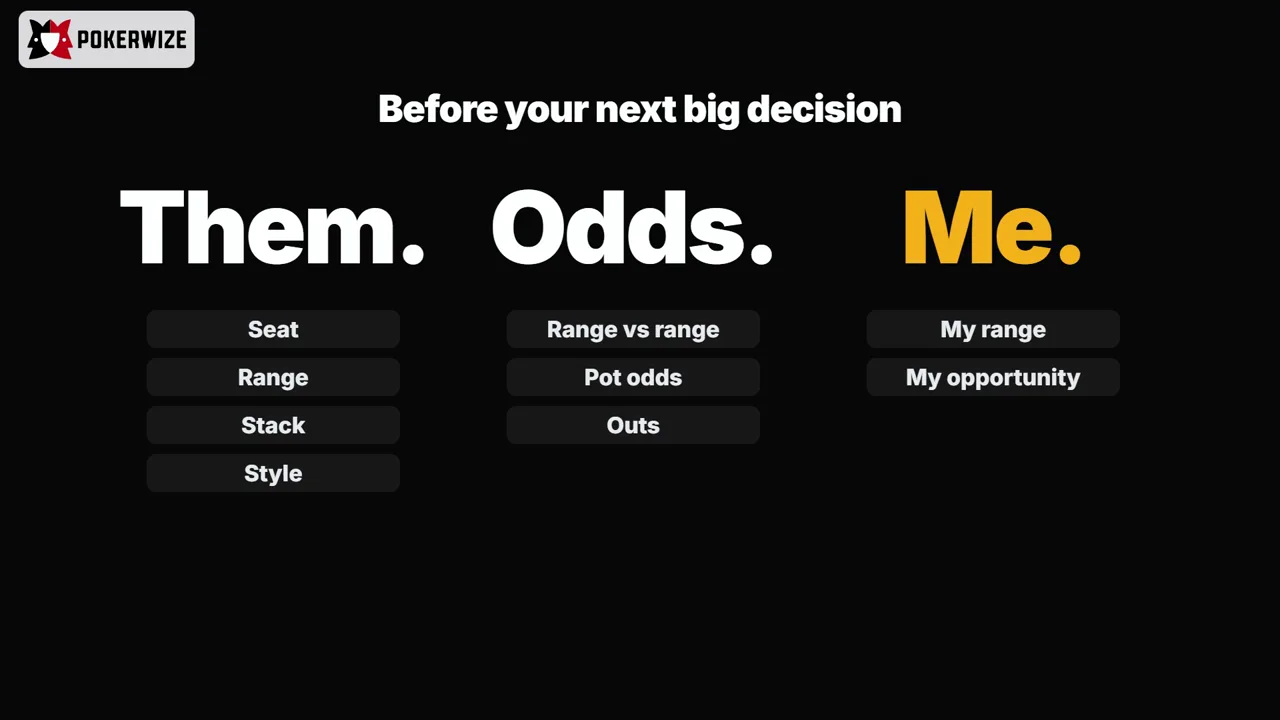
Before your next big decision, slow down and think in three words. Them: where are they sitting, what’s their range, how deep is their stack, how do they like to play? Odds: put your range up against theirs; what are the pot odds and how many outs do you have? And only then, Me: what’s my range here, where’s my opportunity, how do I want to react? Them. Odds. Me.
You can practice the odds half in the PokerWize GTO Trainer, which shows live EV, equity and pot odds on each decision.
Key takeaways
- Read the player first: how many hands do they play, and do they bet or call? That sorts the OMC, Calling Station, Shark and Maniac.
- The same river call is about −70 chips against the OMC (one bluff in ten) and about +50 against the Maniac (half bluffs).
- Against a Calling Station who never folds, stop bluffing and bet good hands bigger; against a player who folds half the time, bluff more.
- GTO is home base: move away only as far as the evidence takes you.
Learn. Play. Master.
Put it into practice: start training for free at www.pokerwize.com.